
Learning to See the Details: How Close-Up Nature Photography Inspires Surface Design
Learning to See the Details: How Close-Up Nature Photography Inspires Surface Design
Many photographers are drawn to what I like to call the "big shot."
It's the sweeping mountain landscape, the wide-open meadow, the lake at sunset, or the panoramic view from the overlook. Those photographs tell an important story, and I enjoy capturing them too.

But if I'm being honest, my favorite photographs are not always the big shots.
My favorite photographs are the close-ups.
They're the details that make up those larger scenes—the peeling bark on an old tree, the veins in a leaf, the weathered texture of a rock, the delicate petals of a wildflower, or the patterns hidden within nature that many people walk right past.
What fascinates me is that every subject has countless stories to tell depending on how closely you're willing to look.
Take a tree, for example.
You can photograph the entire tree from a distance and capture its shape and presence within the landscape. But move closer and you begin to notice the bark. Walk around to the other side, and the texture changes completely. The light falls differently. The colors shift. New patterns emerge.
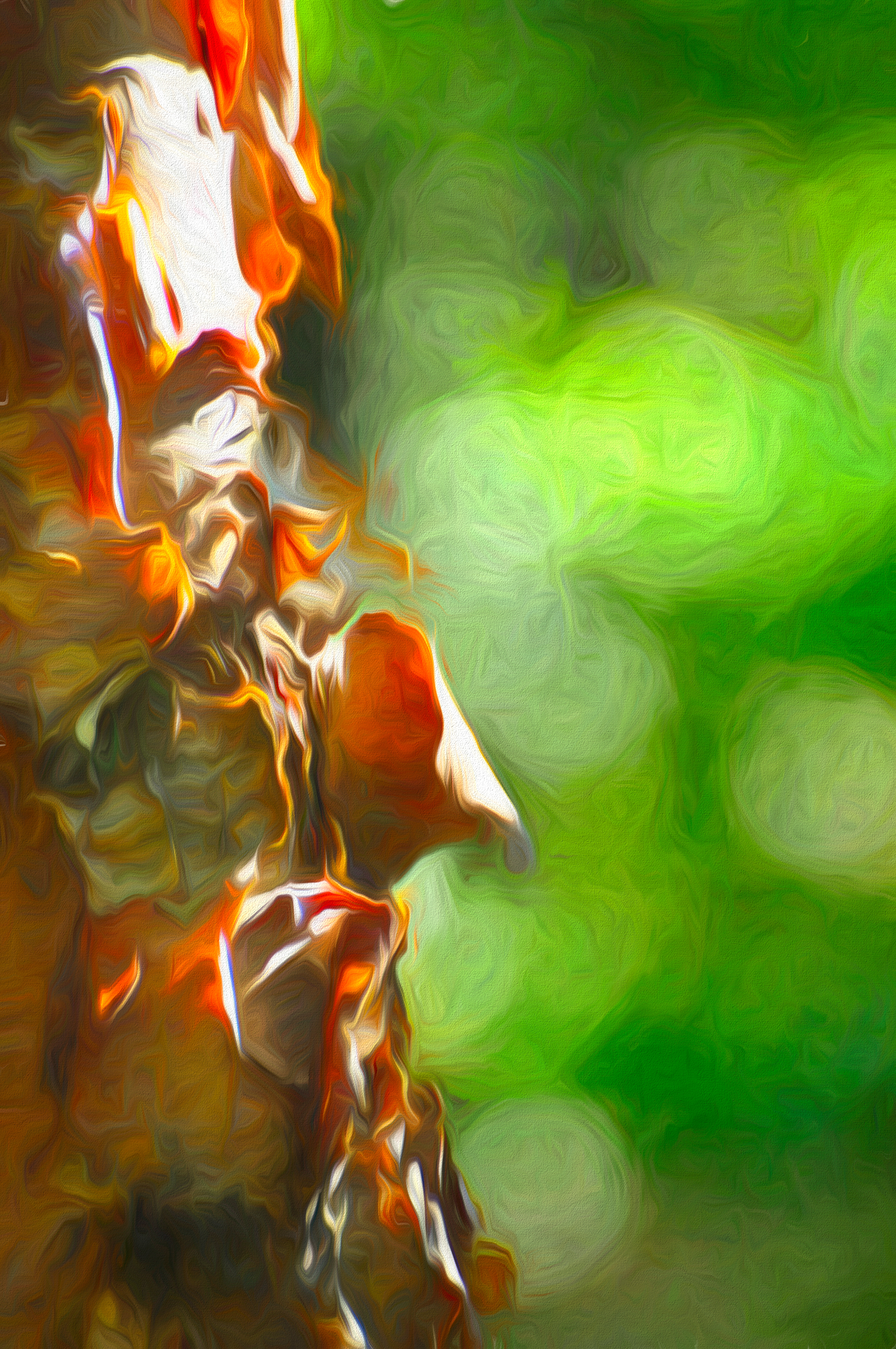
The tree hasn't changed.
Your perspective has.
Over the years, photography taught me to pay attention to those subtle differences. It taught me to notice texture, contrast, shadows, highlights, and the small details that often go unnoticed.
And those details have become one of my greatest sources of inspiration as a surface designer.
When I'm creating designs for throw pillows, wallpaper, fabric, or art prints, I often return to those close-up photographs. The textures found in tree bark may inspire a repeating pattern. The colors hidden within a flower may become a color palette. The weathered surface of a rock may influence the movement and structure of a design.
The inspiration isn't always obvious.
Sometimes it's not about recreating what I photographed at all. Instead, it's about capturing the feeling, rhythm, texture, or visual interest that first caught my attention.
One of the most valuable things photography has taught me is how to see.
Not just to look, but to truly see.
To notice the intricate details that make up the larger picture.
I've always considered myself a big-picture person. I like understanding the overall vision before diving into the details. Often, the big picture is enough.
But nature has taught me that some of the most interesting discoveries happen when you slow down and look closer.
Once you learn to see texture, pattern, light, and detail in the natural world, you begin to notice them everywhere.
And when that happens, your perspective changes.
The landscape is still beautiful.
But so is the bark.
And the leaf.
And the tiny detail hidden within the larger scene.
Sometimes the most inspiring designs don't come from the grand view.
They come from the details that most people never stop long enough to notice.
